

Why Are Architectural Water Curtains So Popular?
Aug 17, 2026
Leave a message
Why movement, light, and architectural integration are making water curtain systems a standout feature in modern commercial design.

In contemporary architecture and interior design, visual impact is no longer created by static materials alone. Architects and designers increasingly look for elements that combine movement, light, sound, and spatial experience. Among these design features, the architectural water curtain has attracted growing attention for its ability to transform ordinary spaces into memorable environments.
Unlike traditional fountains, a modern water curtain is designed as an architectural element rather than simply a landscape feature. Whether used as a water curtain wall in a hotel lobby, a commercial entrance, a showroom, or a hospitality space, it creates a continuous sheet of flowing water that interacts with lighting and surrounding materials.
What Is an Architectural Water Curtain?
An architectural water curtain is a vertical water feature that creates a controlled, continuous flow of water from an upper distribution system into a collection basin below. Depending on the project, the system may be integrated with glass, metal, stone, lighting, or decorative mesh to become part of the building's overall design.
Compared with conventional fountains, an architectural water curtain is typically designed around the geometry of the space.
A complete water curtain system generally includes:
- Water distribution components
- A circulation pump
- A lower water collection basin
- Structural support
- Water flow control
- Optional LED lighting
- Maintenance access
Why Are Water Curtains Becoming So Popular?
They Transform Spaces Into Experiences
Modern commercial design increasingly focuses on how people experience a space rather than simply how it looks.
A well-designed architectural water curtain can influence several senses at once:
- Sight: flowing water and reflections create movement.
- Sound: the gentle sound of water can help create a calm atmosphere.
- Light: integrated lighting can dramatically change the appearance of the feature.
This makes water curtains especially suitable for hospitality and retail environments where designers want visitors to remember the space. Instead of functioning only as decoration, the water feature becomes part of the overall architectural experience.
They Combine Water, Light, and Architecture
One of the biggest advantages of a water curtain wall is its ability to integrate with different architectural materials.
Water curtains can be combined with:
- Glass walls
- Stainless steel
- Decorative metal mesh
- Stone finishes
- Wood panels
- LED lighting systems
For example, a decorative metal mesh placed behind a water curtain can create layered reflections and add depth to the installation. Lighting can further enhance the effect, making the feature appear completely different during the day and at night.
This flexibility allows architects to adapt the same concept to minimalist, contemporary, or luxury interior styles.
They Can Be Customized for Different Projects
Unlike many prefabricated decorative features, custom water curtain systems can be designed to match the requirements of a specific project.
Typical customization options include:
- Overall width and height
- Water flow rate
- Installation orientation
- Structural frame
- Surface materials
- Lighting integration
- Control systems
This makes the architectural water curtain suitable for both relatively compact interior installations and large commercial projects. For architects and contractors, customization is especially important because every building has different dimensions, structural conditions, and design objectives.
Where Are Architectural Water Curtains Used?
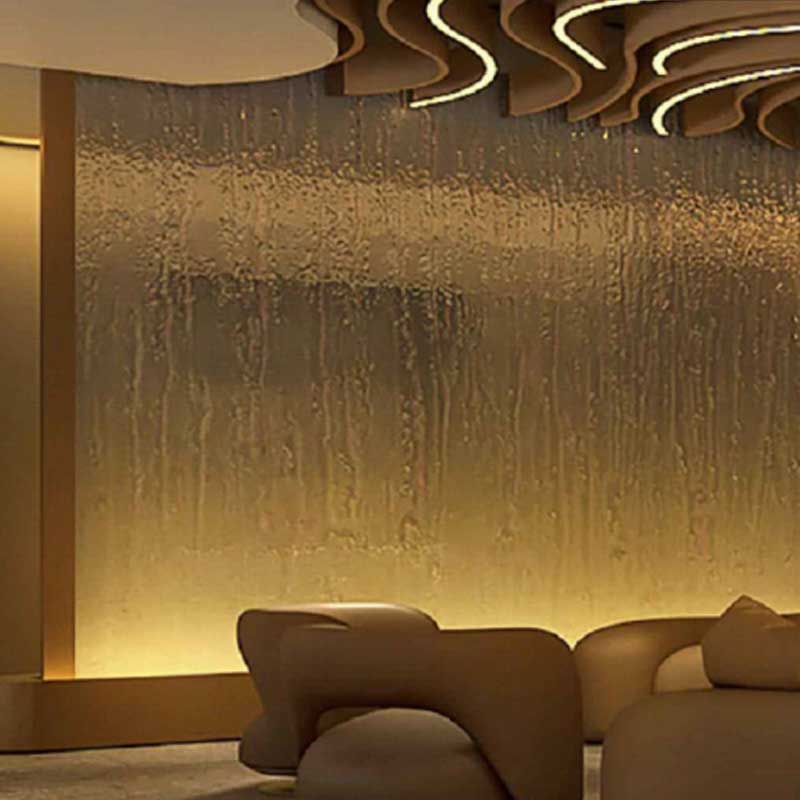
Hotel Lobbies
Hotels often use a hotel water curtain to create a memorable first impression.
Whether positioned behind the reception desk or in the center of the lobby, the flowing water forms the visual focal point of the space. The graceful ripples of the water complement luxurious materials such as brass, natural stone, and artistic metal mesh, blending strength and softness to highlight the sophisticated style of the space.
Shopping Malls
Shopping malls frequently incorporate water features into entrances and atriums. Major shopping malls often incorporate water features into their entrances and atriums. A water curtain slowly descends, organizing the vast and open space and creating a unique visual imprint; the clear and transparent water, standing amidst the water, does not obstruct the view, becoming an unforgettable landmark for visitors.
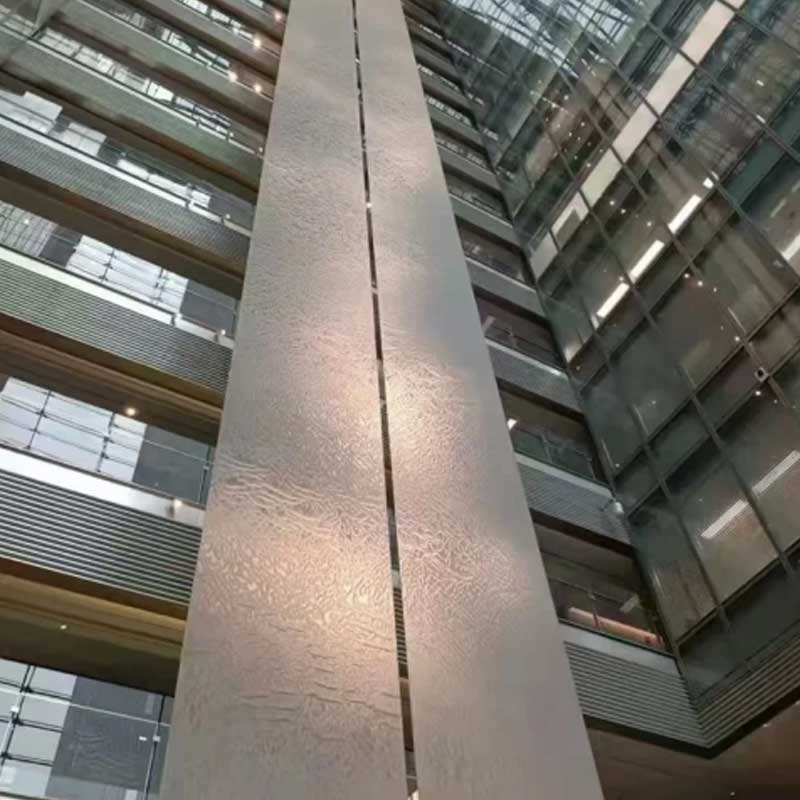

Restaurants and Hospitality Spaces
Restaurants, lounges and resorts frequently embrace water installations to craft soothing, laid-back ambiences. Unlike bulky traditional fountains that take up ample ground area, vertical water curtains occupy minimal floor space, allowing them to blend seamlessly with interior layouts with effortless ease.
Showrooms and Commercial Buildings
For exhibition halls and corporate reception lobbies, water curtains serve to solidify a brand's distinctive design ethos. Acting as a fluid backdrop for brand logos and architectural lighting, they infuse the space with unparalleled character and unique charm.


Landscape and Outdoor Projects
Architectural cascading water curtains embellish outdoor plazas, courtyard gardens and commercial landscapes with flowing vitality. For outdoor water installations, designers ought to foresee and factor in climatic conditions, drainage layout, structural bearing capacity and ongoing maintenance demands at the earliest stage of project conception.
Water Curtain Wall vs Traditional Water Features
Although both create movement with water, architectural water curtains and traditional fountains serve different design purposes.
|
Feature |
Architectural Water Curtain |
Traditional Fountain |
|
Vertical design |
Yes |
Limited |
|
Interior applications |
Excellent |
More limited |
|
Space efficiency |
High |
Medium |
|
Lighting integration |
Easy to integrate |
Possible |
|
Architectural integration |
High |
Medium |
|
Custom dimensions |
Common |
Project dependent |
For projects where wall space is available but floor space is limited, a vertical water curtain often provides greater flexibility.
What Should You Consider Before Choosing a Water Curtain?
Before specifying a water curtain, architects and contractors should evaluate both design and engineering factors.
Size and Dimensions
The overall width and height affect not only the visual impact but also the structural and mechanical requirements of the system.
Water Flow
The water flow must be balanced to create a continuous, even curtain without excessive splashing or uneven distribution.
Materials and Structure
The supporting frame and surrounding finishes should be selected according to the environment and intended application.
For projects that combine water with decorative metal mesh, material selection should take into account moisture exposure and long-term durability.
Lighting Integration
Many projects include LED lighting to enhance the water curtain after dark.
Lighting should be planned together with the water feature rather than added as an afterthought to achieve the best visual effect.
Water Curtain Installation
Professional water curtain installation is essential to the performance of the system.
The installation process typically involves:
- Preparing the structural support
- Positioning the water distribution components
- Installing the lower collection basin
- Connecting the circulation pump
- Testing water flow
- Adjusting the system for even water distribution
- Access for future maintenance should also be considered during the design stage.
Why Choose a Custom Water Curtain System?
Every architectural project is different.
A custom water curtain system allows designers to coordinate the feature with the building's dimensions, finishes, lighting, and overall concept rather than adapting the space to a standard product.
For commercial projects, this approach can provide several advantages:
- Better integration with the architectural design
- More flexibility in dimensions
- Easier coordination with other finishes
- Improved control over the final visual effect
- Engineering support during installation planning
As with other architectural systems, the most successful projects are those where the water feature is considered early in the design process rather than added after construction has already begun.
Looking for a Custom Architectural Water Curtain?
JOYA provides architectural decorative solutions for commercial and architectural projects, including customized water curtain systems designed around project dimensions, installation requirements, and overall design concepts.
- Our team can support architects, designers, and contractors with:
- Custom water curtain dimensions
- Decorative mesh integration
- Material selection
- Installation planning
- Technical support for project applications
If you are planning a hotel, retail, commercial, or architectural project, contact our team to discuss a customized architectural water curtain solution tailored to your design requirements.